Bedding · Mattress Basics
Naturepedic Organic Crib Mattresses: Materials, Fit, and Safety Checks
A crib mattress is a small object with a large responsibility. When comparing Naturepedic organic crib mattresses, look beyond labels to the construction, dimensions, care instructions, and safe-sleep practices that matter every day.
Choosing a mattress for a baby can feel like an exercise in decoding: organic claims, waterproof layers, firmness descriptions, certifications, model numbers, and size specifications all compete for attention. Yet the most useful questions are practical. Is the sleep surface firm and flat? Does the mattress fit the crib snugly? Can caregivers clean it according to the manufacturer’s instructions? Are the materials and construction details clearly described?
Those questions apply to any crib mattress, including Naturepedic models. Organic materials may be important to a family’s preferences, but they do not replace the basics of a safe sleep setup. A label is not a safety plan, and a mattress that has appealing ingredients still needs to be the correct size, used as intended, and paired with a bare crib sleep space.
This guide offers a careful framework for assessing materials, firmness, fit, and care. It is educational rather than a substitute for current guidance from pediatric health professionals or product-safety authorities. Product specifications can change, so confirm details for the exact model and production version you are considering.
Start with the sleep-safety essentials
Before comparing fibers or finishes, establish the conditions the mattress must meet. Current safe-sleep guidance from organizations such as the American Academy of Pediatrics emphasizes placing babies on their backs for sleep, using a firm, flat, non-inclined sleep surface, and keeping the crib free of loose bedding and soft objects. Caregivers should follow the latest recommendations and instructions applicable in their location.
In practical terms, a crib should contain a properly fitted mattress covered only by a fitted sheet designed for that mattress. Avoid adding pillows, quilts, comforters, stuffed toys, positioners, or aftermarket padding to the infant sleep area. A mattress protector or topper should not be introduced unless its use is specifically permitted by the mattress and crib manufacturers and remains consistent with current safe-sleep advice. When there is uncertainty, ask a pediatric clinician or consult official public-health guidance.
Firmness matters because an infant sleep surface should not give way substantially under the baby. A mattress may feel different from an adult mattress, where plushness is often marketed as comfort. For a crib, the relevant question is not whether the surface feels luxurious to an adult but whether it is firm, flat, and intended for the child’s age and stage. Never use a sagging, damaged, or improvised sleep surface.
Organic status, natural fibers, or a description such as “non-toxic” should not be treated as proof of safe sleep. These terms describe, or may claim to describe, material sourcing and product attributes; they do not establish that a mattress fits a particular crib or that a sleep arrangement follows safe-sleep guidance.
What “organic” can—and cannot—tell you
In mattress marketing, “organic” can refer to one or more components, such as cotton fiber, rather than every material in the finished product. It is worth checking which part is certified, by whom, and what the certification actually covers. A certification mark should be traceable to a recognized standard and relevant to the product or material being described.
For example, a mattress may use organic cotton in its fill or fabric while also incorporating other components in its support system, waterproofing layer, seams, or fire-protection construction. That does not automatically make the product unsuitable; it means the label alone does not provide a complete materials inventory. Read the product specification and ask the manufacturer for clarification when important details are not clear.
Certifications also have boundaries. Some address agricultural practices or processing; others assess chemical emissions or restricted substances. They are not interchangeable, and none should be assumed to certify every feature of a finished mattress, including fit, firmness, structural durability, or suitability for a specific crib.
A useful comparison is concrete rather than rhetorical: identify the named material, where it appears, what standard applies, and whether the certificate is current. If a listing says “organic cotton,” determine whether the statement refers to the cover, the batting, or both. If a model is described as waterproof, find out what forms the barrier and how the surface should be cleaned. A clear answer is more helpful than a broad promise.
Materials and construction: read the whole mattress
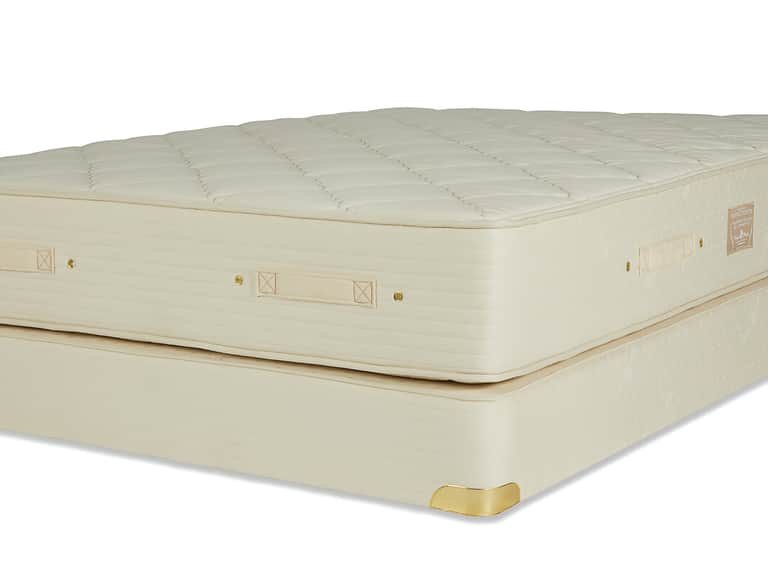
A crib mattress is a layered structure. Its cover, cushioning, waterproof surface, core, seams, and edge construction work together, so comparing one material in isolation can give an incomplete picture. Naturepedic’s product information describes some models as using organic cotton and a waterproof surface, while model names and construction details can vary. Verify the specification for the exact mattress rather than assuming every product in a brand’s range is built the same way.
Cover and surface
The cover is the part caregivers encounter during routine bedding changes and cleaning. Check whether the surface is seamless or has stitched panels, what fabric or coating is specified, and whether the manufacturer gives cleaning instructions. A waterproof surface can make spills easier to manage, but “waterproof” does not mean the mattress can be submerged, machine-washed, or cleaned with any household product. Use only the care method the manufacturer allows.
Ask whether the cover is intended to be removed. If it is not, do not unzip or dismantle the mattress to investigate its interior. Altering the product can compromise its construction, warranty, or intended use. Product information should provide the details caregivers need without requiring them to modify the mattress.
Fill and support core
Some organic crib mattresses use cotton-based filling; other designs may use a different support structure. The core is central to firmness and resilience. Compare the manufacturer’s description of its construction, weight, and intended use, and look for guidance on whether the mattress is designed for infants only or has separate sides for different developmental stages.
When a two-stage model is described, confirm which side is intended for an infant and which is intended for a toddler, and follow the manufacturer’s instructions about when to turn it. A dual-sided design does not mean the softer side is appropriate for an infant. The age and use directions should be explicit and easy to follow.
Waterproofing and moisture management
Infant mattresses encounter routine moisture, so families often prioritize surfaces that can be wiped clean. A waterproof layer may help protect the inner construction, but cleaning still needs to be prompt and consistent with the care label. Avoid assuming that a breathable fabric is waterproof or that a waterproof mattress can never retain moisture around seams, edges, or the crib itself.
After cleaning, follow directions about drying before replacing the fitted sheet. Never place a baby on a wet or damp surface. If liquid has entered the mattress, or if the product shows persistent odor, visible damage, or signs of contamination, contact the manufacturer for advice and consider whether the mattress remains appropriate for use.
Fire-safety construction
Mattresses are subject to applicable flammability requirements. Manufacturers may use different approaches to meet them, and product descriptions may use terms such as barrier or fire-protection system. Look for a specific explanation in the documentation and avoid inferring composition from a slogan. If you have questions about a material or an allergy concern, seek written clarification from the manufacturer and discuss relevant health questions with a clinician.
Fit: the detail you can check at home
A mattress that is too small for its crib can leave gaps; one that is too large may not lie flat or fit as designed. The mattress and crib should be compatible according to both manufacturers’ instructions. Standard-size labels are useful, but they are not a substitute for checking actual dimensions and the crib’s stated requirements.
Some Naturepedic product information lists a mattress size of approximately 27¼ by 51⅝ inches and a thickness of about 6 inches for a particular standard-size model. Treat those measurements as model-specific, not as a guarantee for every Naturepedic mattress. Confirm the dimensions on the current product listing, packaging, and instructions for the exact version you are buying.
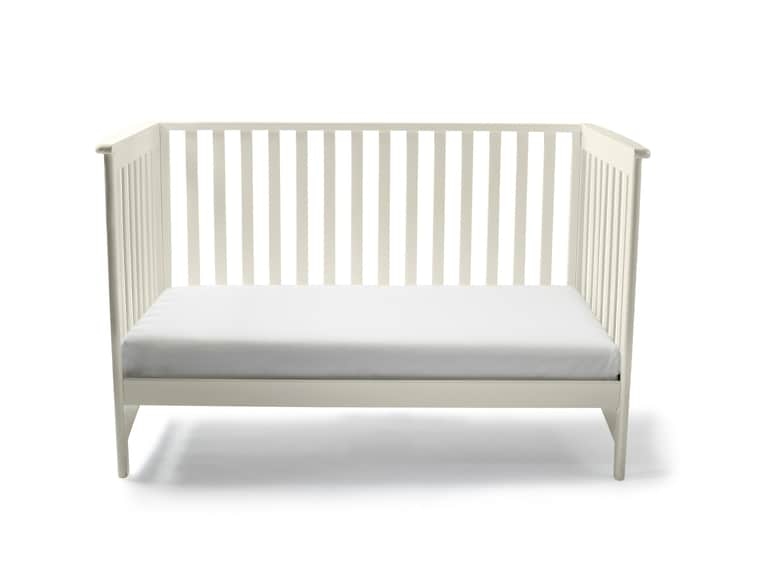
Once the mattress is placed in the assembled crib, check fit around the perimeter. The mattress should sit flat and should not bow, buckle, or be forced into place. A common practical check is whether more than two fingers can fit between the mattress edge and crib side, but this does not replace the crib and mattress manufacturers’ fit requirements or applicable safety standards. If the fit appears questionable, do not try to close a gap with towels, rolled blankets, foam, or other improvised fillers. Contact the manufacturers or choose a compatible mattress.
Inspect fit again after moving the crib, changing its configuration, or replacing the mattress. Also verify that the crib is fully assembled and has not been modified. A correct mattress cannot compensate for an unstable, damaged, or improperly assembled crib.
A practical comparison checklist
Before choosing between organic crib mattresses, gather the same information for each model. Comparing like with like reduces the chance that a compelling headline obscures a missing detail.
- Exact model and version: Record the complete product name, model number, and any distinction between standard, lightweight, or two-stage versions.
- Dimensions: Confirm length, width, and thickness, then compare them with the crib manufacturer’s specifications.
- Firmness and intended stage: Verify that the mattress is described as firm and intended for infant use. For dual-sided models, identify the infant side and follow the instructions for any transition.
- Materials by component: Note the cover, fill, core, waterproof layer, and fire-protection construction separately rather than relying on a single “organic” label.
- Certification details: Identify the certifying organization, the material or product covered, and the applicable standard. Do not assume one certification covers every claim.
- Cleaning instructions: Check whether the surface is wipe-clean, whether a cover is removable, which cleaners are allowed, and how the mattress should be dried.
- Weight and handling: Consider whether the mattress weight will make frequent sheet changes manageable, especially if the crib is in a compact space.
- Condition and return guidance: Review the manufacturer’s policies and instructions for damage, defects, shipping, and product inspection on arrival.
- Product notices: Check current safety notices or recalls through official sources, using the exact model information.
For a concrete example, the Naturepedic Lightweight Organic Cotton Crib Mattress is described in its listing as a cotton-based crib mattress with a waterproof surface and approximate standard-crib dimensions. The listing also identifies different model options, including lightweight and two-stage versions, with different weights. Treat those details as a starting point for verification, not as a substitute for the current manufacturer instructions or crib compatibility check.
Care, inspection, and everyday use
Even a well-chosen mattress depends on routine care. Keep the product documentation where caregivers can find it, and share the essential instructions with anyone who looks after the baby. Clear, consistent use matters more than a complicated maintenance ritual.
Use a fitted sheet that matches the mattress dimensions and stays securely in place. Follow the mattress maker’s rules about protectors, cleaning agents, and accessories. Avoid adding a topper to change the feel: an extra layer can alter the intended sleep surface and may interfere with fit. Do not fold, bend, or store the mattress in a way the manufacturer prohibits.
Inspect the mattress periodically and whenever it has been moved. Look for tears, broken seams, deformation, persistent dampness, unusual odor, or areas that no longer lie flat. Check the crib at the same time for loose hardware, damaged rails, or changes to its assembly. If the mattress has suffered significant damage, seek guidance from the manufacturer rather than trying to repair it with household materials.
When passing a mattress between children or accepting a used one, consider its condition, age, storage history, and whether the model can be identified. Confirm that it fits the crib and that the manufacturer’s instructions remain available. A mattress that appears clean is not automatically in good condition, and unknown modifications or prolonged moisture exposure are reasons for caution.
Avoid common comparison traps
“Organic” does not mean universally safer. It may describe specific materials or production standards, but it does not establish correct fit, firmness, or safe use. Evaluate the whole product and the sleep environment.
“Natural” is not a complete ingredient list. Ask what materials are present in each layer and what claims are supported by documentation. Broad words can be useful summaries, but they should not replace specifics.
“Waterproof” does not mean maintenance-free. Follow cleaning and drying instructions, and inspect the surface and seams over time.
“Two-stage” does not mean interchangeable sides. Use the infant-designated surface for an infant and follow the product’s age-stage directions. Do not infer suitability from firmness by touch alone.
“Standard size” does not settle compatibility. Measure and consult the crib documentation. Small differences between products and crib designs can matter.
Price and weight are not safety measures. A higher price, a lighter build, or an extensive list of materials cannot replace compliance, fit, condition, and correct use.
Questions to ask before deciding
If a product page leaves a gap, direct questions can turn a vague comparison into a useful one. Ask the manufacturer to confirm the exact model’s dimensions and which crib size it is intended to fit. Ask what each layer is made from, which components are certified, and whether documentation is available. Clarify the infant-use side for a two-stage mattress, the cleaning method, and whether any protector or accessory is permitted.
It is also reasonable to ask how the mattress should be handled if it arrives with visible damage, does not lie flat, or does not fit the crib. Save written answers with the product instructions. When details conflict across a retailer listing, packaging, and manufacturer documentation, seek clarification before use.
For health or allergy concerns, discuss the specific materials with a qualified health professional. A mattress label cannot diagnose a sensitivity or establish that exposure will cause—or prevent—a medical outcome.
The bottom line
Evaluating Naturepedic organic crib mattresses is less about finding a perfect adjective than confirming a chain of practical facts. Identify the exact model. Read its construction and certification details. Check firmness and intended use. Match dimensions to the crib. Understand how to clean and inspect it. Then keep the sleep space simple and follow current safe-sleep recommendations.
Organic materials may be an important preference, and transparent specifications can help families make informed choices. But material claims are only one part of the decision. The dependable foundation is a compatible, firm, flat mattress in good condition, used exactly as directed in a safe crib environment.
Quick checklist for caregivers
- Confirm the exact model, current specifications, and intended age or stage.
- Verify that the mattress is firm, flat, undamaged, and compatible with the crib.
- Check the actual dimensions and ensure the mattress sits snugly without forcing it.
- Understand which materials and certifications apply to which components.
- Follow the manufacturer’s cleaning and drying instructions.
- Use a fitted sheet and keep the infant sleep space free of loose items.
- Consult current safe-sleep guidance and ask a pediatric professional when needed.
This article is for general educational purposes and is not medical or product-safety advice. Product details can change; verify current instructions with the manufacturer and follow applicable official guidance.